
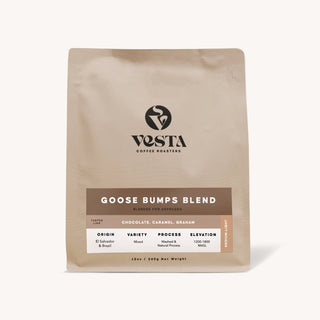
Origin: Costa Rica
Region: El Llano de La Piedra, San Marcos, Tarrazu
Variety: Milenio
Altitude: 1600 masl
Processing: Anaerobic Natural
Don Eli - Anaerobic Honey


Tasting Notes: Almond, Toffee, Cinnamon
Farmer Story - Carlos Montero has been growing coffee his whole life and comes from a
long line of farmers. He had the vision of processing their own coffee fruit and working
more directly with consumers - and the vision became a reality by constructing Don Eli,
(named after his father) in 2014. Carlos was also instrumental in encouraging many other
coffee growers in the Tarrazu region to do the same and begin creating relationships
with roasters. Jacob Carlos’ son, has taken charge of the wet mill over the years and has
honed his passion for processing coffee cherries. In 2025, they added a humble dry mill
station to prepare their parchment for export. Continuing the trend of adding to their
skillset, improving quality, and strengthening their direct relationships.
Anaerobic Process - Carlos and Jacob do their very best at trying to select only the
ripest cherries from the farm. The fresh fruit is brought down to the wet mill and placed
into plastic tanks that are closed and sealed off. The coffee will be there fermenting for
4-5 days. Then, the cherries are removed and depulped to remove the skin - what is left
on the parchment is fermented mucilage that will be absorbed into the bean as it is sun
drying. Jacob lays out the slimy, fermented parchment in a thick layer on raised drying
beds. For the first 2 or 3 days there is little intervention, minimally moving the coffee. As
the drying phase continues the coffee gets more spread out into a thin layer and moved
more frequently. All of this work results in a uniquely fruity cup while still preserving some
of the clean characteristics we like to see in other processes - it’s like a hybrid process.
Recent Projects - There are always new things happening at Don Eli, Carlos cannot keep
still for a second - always moving and working on projects! This season, Jacob and
Carlos added mechanical drying to the mill and expanded fermenting and warehousing
spaces.
Tasting Notes: Almond, Toffee, Cinnamon
Farmer Story - Carlos Montero has been growing coffee his whole life and comes from a
long line of farmers. He had the vision of processing their own coffee fruit and working
more directly with consumers - and the vision became a reality by constructing Don Eli,
(named after his father) in 2014. Carlos was also instrumental in encouraging many other
coffee growers in the Tarrazu region to do the same and begin creating relationships
with roasters. Jacob Carlos’ son, has taken charge of the wet mill over the years and has
honed his passion for processing coffee cherries. In 2025, they added a humble dry mill
station to prepare their parchment for export. Continuing the trend of adding to their
skillset, improving quality, and strengthening their direct relationships.
Anaerobic Process - Carlos and Jacob do their very best at trying to select only the
ripest cherries from the farm. The fresh fruit is brought down to the wet mill and placed
into plastic tanks that are closed and sealed off. The coffee will be there fermenting for
4-5 days. Then, the cherries are removed and depulped to remove the skin - what is left
on the parchment is fermented mucilage that will be absorbed into the bean as it is sun
drying. Jacob lays out the slimy, fermented parchment in a thick layer on raised drying
beds. For the first 2 or 3 days there is little intervention, minimally moving the coffee. As
the drying phase continues the coffee gets more spread out into a thin layer and moved
more frequently. All of this work results in a uniquely fruity cup while still preserving some
of the clean characteristics we like to see in other processes - it’s like a hybrid process.
Recent Projects - There are always new things happening at Don Eli, Carlos cannot keep
still for a second - always moving and working on projects! This season, Jacob and
Carlos added mechanical drying to the mill and expanded fermenting and warehousing
spaces.
Origin: Costa Rica
Region: El Llano de La Piedra, San Marcos, Tarrazu
Variety: Milenio
Altitude: 1600 masl
Processing: Anaerobic Natural
Sourced & Roasted With Intention
We individually profile and roast each coffee to their specific sweet-spot
Sourcing & Selection
Vesta direct sources 90% of our coffees directly from farmers and coops at origin. And uses trusted export partners for the remaining coffees.
All coffees are selected based on taste profiles. We believe that origin, processing and terroir all play a part to make each coffee unique.
Maintaining Relationships
You will notice that many of our coffees are available for multiple years. We are proud (and thankful) to be able to work with many of the same farmers year-after-year. Many times purchasing the farmers entire harvest. Helping the producer have some economic stability, and helping us with a consistent product year after year.